
Forget about downloading a movie in three seconds on your smartphone. The consumer narrative around 5G was a distraction. In 2026, 5G is no longer a telecommunications upgrade; it is the critical infrastructure layer for the entire global industrial economy.
While the public spent years arguing over millimeter wave coverage and battery life, enterprise giants were quietly building Private 5G networks. Today, factories operate without cables, millions of autonomous vehicles stream terabytes of data simultaneously, and AI models execute real-time reasoning at the edge of the network. If compute is the brain of the new economy, 5G is the central nervous system.
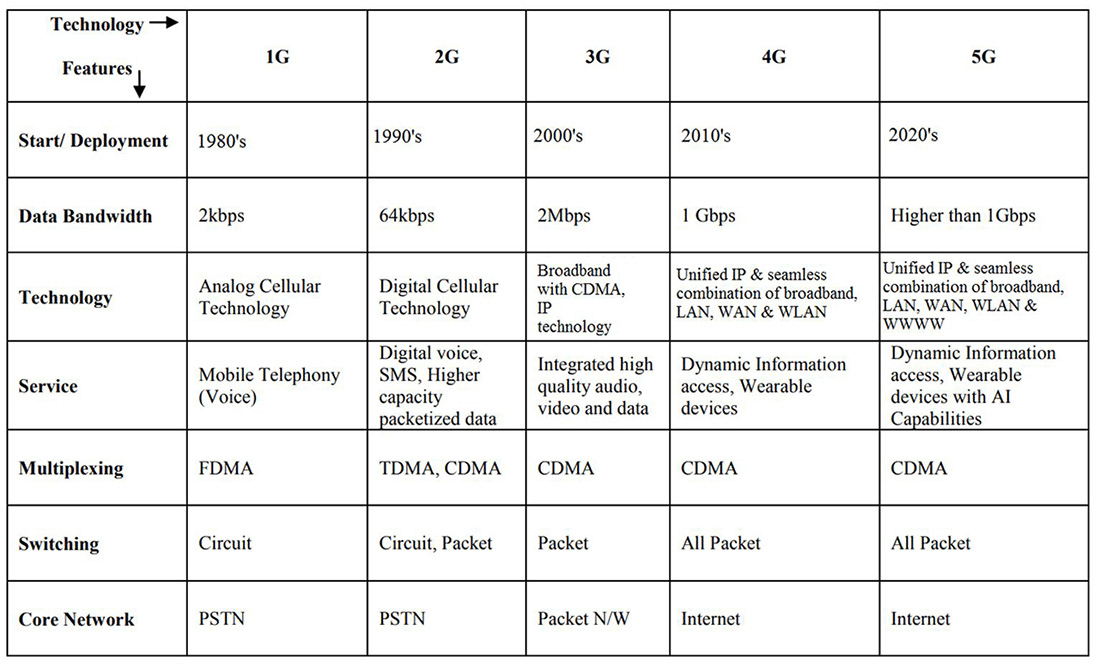
The industry is reaching a tipping point because we have finally moved past the “hybrid” phase. In 2026, global 5G subscriptions crossed the staggering 3.1 billion mark. More importantly, the rollout of true 5G Standalone (SA) architectures means carriers can now “slice” their networks, offering guaranteed, un-hackable, zero-latency lanes exclusively for corporate logistics or emergency services.
This matters because traditional Wi-Fi and 4G simply collapse under the weight of generative AI and automated robotics. We are transitioning from connecting billions of people to connecting trillions of machines. For businesses, mastering 5G integration is no longer an IT decision; it is a fundamental prerequisite for surviving the automated decade.
At a Glance
- Technology Phase: 5G Advanced (3GPP Release 18/19)
- Global Subscriptions: 3.1 Billion (Q1 2026)
- 5G Services Market (2026): ~$319.9 Billion
- Key Frequencies: Sub-6 GHz (Coverage) & mmWave (Speed)
- Leading Equipment Vendors: Ericsson, Nokia, Huawei, Samsung
- Core Enterprise Tech: 5G Standalone (SA) & Network Slicing
- Data Traffic Share: 5G handles ~48% of global mobile data
Key Takeaways
- The 3 Billion Milestone: Driven by massive adoption in North America, China, and India, global 5G subscriptions surged past 3.1 billion in early 2026, forcing a rapid phase-out of legacy 3G and 4G networks.
- The Standalone (SA) Reality: Early 5G was just a 5G radio bolted onto a 4G core (NSA). True 5G—Standalone (SA)—is now the global standard, unlocking the ultra-low latency promised years ago. Over 90 global providers have successfully launched SA.
- Network Slicing is the Cash Cow: Telecoms can now partition a single physical network into multiple virtual networks. A hospital can buy a “slice” with guaranteed bandwidth for remote surgery that remains completely unaffected by local consumers streaming Netflix.
- The Private 5G Boom: The hardware segment for Private 5G networks is exploding, heavily driven by the manufacturing sector adopting “Industry 4.0” standards.
- The AI Uplink Crisis: AI is changing how we use data. Instead of just downloading content, AI edge devices are uploading massive amounts of real-time video and telemetry. Network data traffic grew 22% year-over-year in Q1 2026, with uplink demand forcing major infrastructure upgrades.
Timeline
| Date | Milestone | Key Details |
| 2019 | Commercial Launch | The first 5G networks go live globally, heavily reliant on Non-Standalone (NSA) architecture (using 4G core infrastructure). |
| 2021 – 2023 | The Coverage Phase | Telcos prioritize Sub-6 GHz bands to blanket cities with 5G icons on phones, though consumers notice only moderate speed increases. |
| 2024 | 5G Advanced (Release 18) | The 3GPP standardizes “5G Advanced,” introducing AI natively into the network and improving uplink capabilities for enterprise IoT. |
| Q1 2026 | The Enterprise Tipping Point | Global subscriptions cross 3.1 billion. 5G Standalone network slicing jumps from early adoption to mainstream commercialization. |
| 2031 (Projected) | The 6G Horizon | 5G is expected to reach 6.4 billion subscriptions (85% of global data traffic), setting the stage for early 6G commercialization. |
The Spectrum War: How It Works
The Physics of Frequency
To understand 5G, you have to understand the brutal physics of radio waves. 5G operates across three main spectrum bands, forcing carriers to balance speed against distance.
- Low-Band (Under 1 GHz): Travels for miles and easily penetrates buildings. Speeds are marginally better than 4G. This is the “fake” 5G most rural consumers experience.
- Mid-Band (Sub-6 GHz): The global sweet spot. It offers excellent speeds (hundreds of Mbps) while still covering decent distances. This frequency currently dominates the enterprise and Private 5G market.
- High-Band (mmWave, 24 GHz+): The hyper-speed tier (multi-gigabit). However, millimeter wave signals can barely travel a few blocks and are blocked by trees, rain, and glass. It is strictly used for dense stadiums or specific automated factory floors.
The SA Revolution
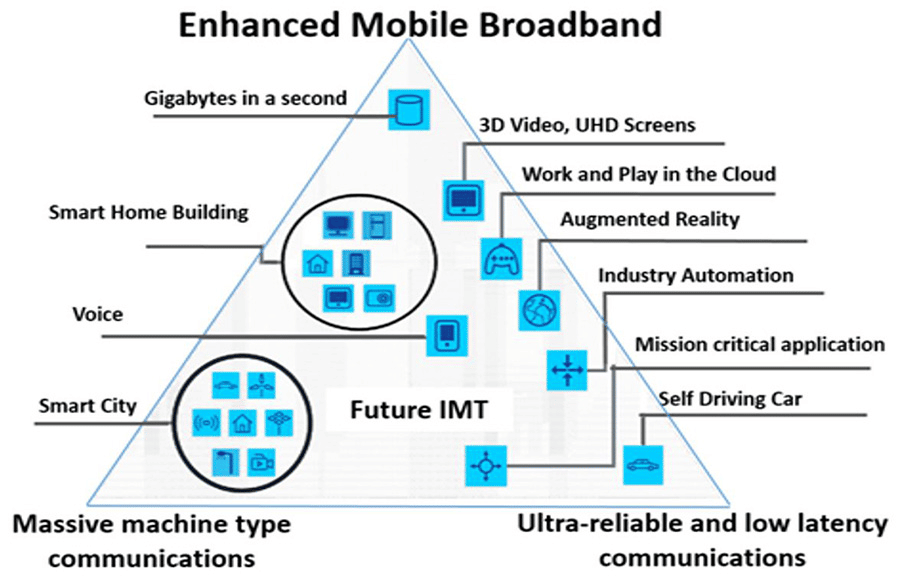
Until recently, most 5G networks were “Non-Standalone” (NSA). This meant your phone talked to a 5G tower, but that tower sent the data back through an old 4G core network—bottlenecking the latency. With the aggressive 2026 rollout of 5G Standalone (SA), the entire pipeline is upgraded, unlocking the millisecond reaction times necessary for self-driving cars and robotic automation.
Fixed Wireless Access (FWA): The Cable Killer
While mobile gets the hype, Fixed Wireless Access (FWA) is quietly destroying the traditional broadband monopoly. Instead of laying physical fiber-optic cables to a house or business, telcos put a 5G receiver on the roof. By mid-2026, 71% of FWA service providers offer this service over 5G. This allows carriers to instantly deploy enterprise-grade internet to remote industrial sites without spending millions digging up roads.
Network Slicing: The Monetization Engine
For a decade, telecom companies spent billions laying infrastructure only for tech giants (like Meta and Google) to profit off the data. Network Slicing changes the financial model.
By utilizing cloud-native 5G SA cores, a telecom provider can mathematically slice a network. An automaker can lease an exclusive slice just for their connected vehicles. This slice guarantees constant bandwidth and security, independent of public network congestion. In early 2026, the number of commercial slicing offerings grew by nearly 30% in just six months. It is the ultimate B2B SaaS model applied to physical radio waves.
4G vs 5G vs 6G (Projected)
| Feature | 4G (LTE) | 5G (Standalone) | 6G (Projected 2030+) |
| Peak Speed | ~1 Gbps | ~20 Gbps | ~1,000 Gbps (1 Tbps) |
| Latency | 30 – 50 milliseconds | 1 – 5 milliseconds | Microsecond level |
| Connection Density | 100,000 devices / sq km | 1 Million devices / sq km | 10 Million devices / sq km |
| Primary Focus | Mobile Internet & Video | Industrial IoT & Automation | Holographic Comm & Brain-Computer Interfaces |
Key Numbers
| Metric | The 5G Economy (2025/2026 Context) |
| Global Subscriptions (Q1 2026) | 3.1 Billion |
| Global 5G Services Market (2026) | ~$319.9 Billion |
| Data Traffic Dominance | 48% of all mobile traffic |
| Commercial Slicing Offerings | 84 across all regions |
| 2031 Subscription Forecast | 6.4 Billion |
| FWA Over 5G Adoption | 71% of providers |
Common Misconceptions
“5G is just about faster download speeds.”
Downloading a movie faster is a byproduct. 5G was engineered for capacity and latency. It allows a million devices in a single square kilometer to communicate simultaneously without dropping connections. It is built for machines, not Netflix.
“My phone says 5G, so I am experiencing the future.”
Unless your carrier has fully deployed a 5G Standalone (SA) core and you are in a Mid-Band or mmWave coverage zone, you are likely using Non-Standalone (NSA) 5G. It is essentially 4G infrastructure with a modest speed boost.
“5G causes health risks.”
Extensive global research by the WHO and independent scientific bodies confirms that 5G radio waves are non-ionizing. They lack the energy to break molecular bonds or damage human DNA.
Why It Matters for Businesses
The Brutal Math of Latency
For modern executives, ignoring Private 5G is equivalent to running a business without Wi-Fi in 2010.
- The Cost: Building a Private 5G network for a manufacturing plant eliminates thousands of miles of copper wiring, slashing maintenance and CapEx.
- The Shift: Factory floor layouts are no longer restricted by where the ethernet ports are.
If your competitor uses a 5G edge-compute architecture, their AI quality control cameras can detect a manufacturing defect in 2 milliseconds, automatically stopping the assembly line. If you rely on Wi-Fi, the network congestion causes a 100-millisecond delay—which means the defective product is already packaged. 5G isn’t a telecom upgrade; it is a competitive ultimatum for industrial efficiency.
Investment Perspective
Wall Street has historically punished telecom operators for the massive Capital Expenditures (CapEx) required to build 5G networks. However, the narrative is shifting in 2026 as monetization finally kicks in.
Investors are heavily rotating out of hardware equipment vendors (as the macro-network buildout peaks) and into 5G Services and System Integrators. The massive 56% CAGR projected for 5G services (hitting over $17 Trillion by 2035) lies in enterprise contracts, network slicing SaaS models, and AI-driven network management software. Private 5G infrastructure remains the hottest high-growth sub-sector, dominating enterprise CapEx in the manufacturing and logistics spaces.
FAQ
Who actually invented 5G?
No single company invented it. 5G is a global standard defined by the 3GPP (3rd Generation Partnership Project). Companies like Ericsson, Nokia, Huawei, and Qualcomm contribute patents and technology to build the standard.
What is a Private 5G Network?
Instead of using a public carrier like AT&T or Vodafone, a massive corporation (like a port authority or an automaker) buys its own spectrum and equipment. They operate their own private, isolated cell network covering only their physical footprint.
Why is 5G critical for AI?
Generative AI and computer vision models require massive amounts of data. A drone inspecting a pipeline cannot process the AI locally; it must send high-res video to the cloud and receive an instant command. Only 5G provides the uplink bandwidth and millisecond latency to make this possible.
What is 5G Advanced?
Sometimes called “5.5G,” this is the software evolution (3GPP Release 18) currently deploying in 2026. It natively integrates AI into network management, dramatically improves energy efficiency, and boosts precise indoor positioning (tracking a forklift down to the centimeter).
Will 5G replace Wi-Fi?
No. They are complementary. Wi-Fi 7 is excellent for cheap, indoor, localized connectivity. 5G is essential for wide-area coverage, mobility (devices moving at high speeds), and environments requiring strict security and guaranteed bandwidth slicing.
Why is uplink suddenly a problem?
Historically, humans downloaded far more than we uploaded (streaming video). Today, autonomous vehicles and AI cameras are uploading terabytes of data back to the network. 5G architectures are rapidly being recalibrated to handle this massive uplink surge.
How does 5G impact autonomous driving?
Through C-V2X (Cellular Vehicle-to-Everything). 5G allows cars to talk directly to each other and to the traffic lights, sharing braking telemetry in milliseconds, which prevents accidents that onboard sensors alone couldn’t anticipate.
What happens to 3G and 4G?
3G is effectively dead globally. 4G LTE will serve as the reliable fallback network for the next decade, though carriers are actively “refarming” (repurposing) 4G spectrum to feed the bandwidth demands of 5G.
The Bottom Line
The era of 5G being a consumer marketing gimmick is over. With over 3.1 billion active subscriptions and a hyper-profitable enterprise market, 5G has matured into the invisible grid running the global economy.
The transition to 5G Standalone and network slicing has finally unlocked the multi-billion-dollar enterprise revenue streams that carriers were banking on. Over the next five years, the integration of AI-driven uplink traffic and Private 5G deployments will dictate which industrial sectors thrive and which fail. 5G is no longer about connecting your phone to the internet; it is about connecting the physical world directly to the cloud.


