
From ChatGPT and autonomous vehicles to healthcare and finance, discover how artificial intelligence is redefining the future of technology, business, and everyday life.

Introduction
Welcome to 2026, where Artificial Intelligence (AI) has officially graduated from writing quirky poems for college students to running the back-office operations of the Fortune 500. We have moved past the era of the simple chatbot. Today, AI is the foundational infrastructure of the modern digital economy, acting less like an encyclopedia and more like an autonomous digital workforce.
Why does this matter right now? Because the economics of the tech world have violently flipped. We are witnessing an era where autonomous “Agentic AI” systems don’t just answer questions; they plan, execute, and correct complex, multi-step workflows without human hand-holding. This shift has completely disrupted the corporate pecking order, proving that selling high-octane B2B productivity tools is vastly more lucrative than charging consumers twenty bucks a month for a chat interface.
This technology has reshaped every industry it has touched, from automating brutal IT service management tasks to predicting financial market risks in real-time. But the real drama is in the boardroom: open-source models are becoming dangerously competitive, governments are trying to buy equity in AI labs to secure national interests, and the race to build the smartest digital brain has never been more cutthroat.
At a Glance
- Global Market Size (2026): $539.5 Billion to $900.0 Billion (depending on hardware inclusion)
- Projected CAGR: 18.7% to 30.6% into the 2030s
- Largest Market: North America (~31% to 36% revenue share)
- Leading Companies: NVIDIA, Anthropic, OpenAI, Meta, Microsoft, Google
- Main Applications: Agentic Workflow Automation, Code Generation, BFSI Risk Management, Healthcare Diagnostics
- Key Technologies: Mixture of Experts (MoE), Agentic Orchestration, Large Language Models (LLMs), Retrieval-Augmented Generation (RAG)
Key Takeaways
- Anthropic Dethrones OpenAI: In a shocking upset, Anthropic’s B2B-focused Claude models pushed its revenue run-rate past $30 billion by April 2026, surpassing OpenAI’s $20 billion and securing a $965 billion valuation.
- The Agentic AI Boom: The industry has shifted from passive generative AI to Agentic AI, where autonomous systems use tools, APIs, and memory to execute complex corporate tasks without supervision.
- Open-Source Gets Dangerous: Meta’s Llama 4 family commoditized state-of-the-art intelligence. Using a highly efficient Mixture of Experts (MoE) architecture, it allows enterprises to run genius-level AI on their own private servers.
- Geopolitics Enters the Chat: The U.S. government is actively negotiating a 5% equity stake in OpenAI to ensure regulatory alignment and protect American AI supremacy against rising foreign models.
Timeline
- 1950: Alan Turing publishes “Computing Machinery and Intelligence,” introducing the Turing Test to evaluate if machines can think.
- 1956: The term “Artificial Intelligence” is officially coined by John McCarthy at the Dartmouth Conference, birthing the academic field.
- 1957: Frank Rosenblatt develops the Perceptron, an early neural network that proves machines can learn from data.
- 2017: Google scientists introduce the “transformer” architecture, the technological bedrock that makes modern generative AI and LLMs possible.
- 2022: OpenAI launches ChatGPT, sparking a global frenzy and ushering generative AI into the mainstream consciousness.
- April 2025: Meta releases the open-source Llama 4 family, introducing a 10-million token context window and proving open weights can rival closed models.
- April 2026: Anthropic’s revenue run-rate triples in a single quarter to over $30 billion, officially overtaking OpenAI as the most valuable AI startup.
- July 2026: OpenAI strikes back by launching the highly anticipated GPT-5.6 series (Sol, Terra, Luna), boasting robust adaptive reasoning.
What Is Artificial Intelligence?
At its core, Artificial Intelligence is the science of training computer systems to perform tasks that typically require human cognition. For decades, this meant writing endless lines of rigid, rule-based code. But the modern AI revolution is built on Machine Learning (ML) and Deep Learning, where neural networks learn patterns directly from massive datasets instead of relying on hardcoded instructions.
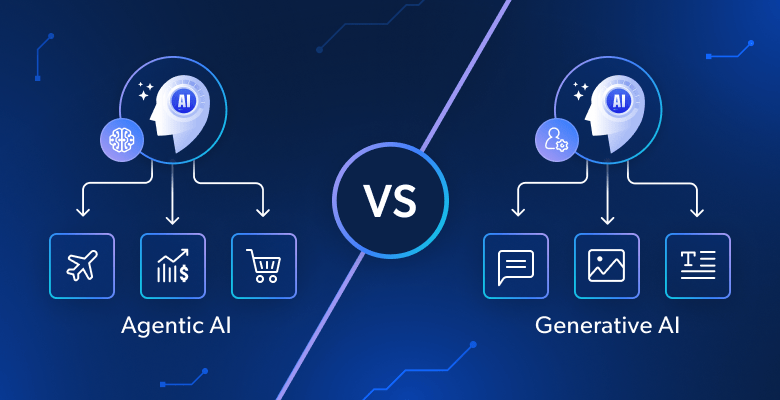
Generative AI took this a step further by creating entirely new content—text, code, images—based on those learned patterns. However, in 2026, the buzzword that matters is “Agentic AI.” An AI agent doesn’t just generate a polite response; it understands an objective, breaks it down into steps, uses software tools to gather data, and executes a real-world action. It is the difference between a calculator and a financial advisor.
How It Works: The “Mixture of Experts” Revolution

To understand how 2026 AI works, you have to understand why the old models became too expensive to run. Early LLMs (like GPT-3) were “dense” models. If you asked a dense model to solve a simple math problem, it would light up all 175 billion of its digital neurons to find the answer, consuming massive amounts of electricity and computing power.
The game-changer was the widespread adoption of the Mixture of Experts (MoE) architecture. Instead of one massive brain, an MoE model is subdivided into smaller, specialized sub-networks (the “experts”). When you ask a question, a router instantly decides which specific experts are best suited for the task and only activates those.
For example, Meta’s Llama 4 Scout model has 109 billion total parameters, but it only activates 17 billion of them for any given word. This drastically cuts down the processing cost and latency, allowing incredibly smart models to run locally on surprisingly modest hardware.
Applications: The Agentic Era
If you are still using AI just to draft polite emails, you are falling behind. Enterprises in 2026 have moved from pilot budgets to full-scale production commitments, heavily utilizing frameworks like Microsoft Copilot Studio, ServiceNow AI, and LangGraph to build digital workforces.
Microsoft Copilot Studio currently boasts over 160,000 organizations running 400,000+ custom agents, natively embedded into enterprise workflows. In the Banking and Financial Services (BFSI) sector, agents are continuously monitoring global transaction streams to detect fraud and manage algorithmic risk in real-time. In healthcare, diagnostic AI is reducing dosage errors and managing complex clinical trial data without human fatigue.
Competition: The 2026 Model Wars
The battle for AI supremacy is a bloody, three-way war between closed-source giants, open-weight disruptors, and surprisingly cheap foreign models.
OpenAI and Anthropic are fighting a brutal cage match for enterprise dominance. Anthropic recently took the lead, heavily targeting developers with Claude Code and launching the Claude 5 family (Fable and Mythos) in June 2026. OpenAI countered in July 2026 with the GPT-5.6 series, bringing the flagship “Sol” model to market with advanced reasoning capabilities aimed at reclaiming the high ground.
Meanwhile, Meta is playing an entirely different game. By giving away the Llama 4 model family for free, Meta is ensuring that developers don’t become hopelessly addicted to Microsoft or Amazon’s paid APIs. And lurking in the background are Chinese labs like DeepSeek, whose incredibly cheap, highly capable models have captured over 30% of U.S. developer traffic on routing platforms by drastically undercutting Western API prices.
Comparison Table: The Frontier Models of 2026
| Company | Model Generation | Key Highlights |
| Anthropic | Claude 5 (Fable, Mythos, Sonnet) | Launched June 2026. Dominates B2B agentic coding and complex professional workflows. |
| OpenAI | GPT-5.6 (Sol, Terra, Luna) | Launched July 2026. Features an advanced router that toggles between fast responses and deep “thinking.” |
| Meta | Llama 4 (Scout, Maverick) | Launched April 2025. Open-source MoE architecture. Scout features a massive 10M token context window. |
| DeepSeek | DeepSeek-V3 / Flash | Chinese open-weights model disrupting the market by severely undercutting Western API costs. |
Key Numbers
| Company | Revenue Run-Rate (FY25/FY26) | Market Cap / Valuation | Strategic Position |
| NVIDIA | $215.9 Billion | $4.74 Trillion | The undisputed hardware monopoly supplying the shovels for the AI gold rush. |
| Anthropic | >$30 Billion (Apr 2026) | $965 Billion | Overtook OpenAI by mastering B2B agentic enterprise tools and coding assistants. |
| OpenAI | >$20 Billion (2025) | $852 Billion | Massive B2C reach, currently leveraging government ties ahead of a mammoth IPO. |
| Meta | N/A (Open-weights) | $1.2 Trillion+ | Commoditizing the AI layer to prevent closed-source monopolies from taxing its ad business. |
Common Misconceptions
Misconception: AI is going to steal everyone’s job tomorrow. Reality: AI doesn’t replace jobs; it replaces tasks. Organizations aren’t firing their staff to replace them with bots; they are transitioning human workers into “orchestrators” who manage teams of specialized AI agents.
Misconception: Bigger models are always smarter and better. Reality: Efficiency has proven more valuable than sheer size. Thanks to MoE architectures, a smaller, highly specialized active parameter count (like Llama 4 Scout’s 17B) can process massive amounts of data much faster and cheaper than an older, bloated dense model.
Why It Matters for Businesses
If your business isn’t deploying agentic AI, you are operating at a severe, structural disadvantage. However, navigating this space is a minefield of “Vendor Lock-in.” The platform you choose today dictates how your digital workforce operates tomorrow.

Enterprises must balance capability with data sovereignty. Uploading highly sensitive legal or financial data to a public cloud API can trigger massive compliance violations. This is why open-weight models like Llama 4 are crucial; they allow companies to host genius-level AI on their own secure, on-premise hardware, keeping proprietary data hermetically sealed from prying eyes.
Investment Perspective
The financial metrics in the AI sector are completely unhinged from historical norms. Anthropic’s revenue run-rate shot from $1 billion to over $30 billion in roughly a year, proving that the true goldmine is in enterprise productivity tools, not consumer chatbots.
However, the hardware costs are staggering. Training and running these models burns billions of dollars in compute power. The real investment narrative of 2026 is the margin squeeze: AI labs must convince enterprises to pay premium API prices while fending off free open-source alternatives and ultra-cheap Chinese models.
Geopolitics: The AI Cold War
AI is no longer just a tech sector issue; it is a matter of national security. The U.S. government views advanced AI models as strategic weapons. In mid-2026, news broke that the Trump administration was negotiating to acquire a 5% equity stake in OpenAI. This unprecedented move aims to solidify American AI supremacy, keep intellectual property stateside, and pressure other labs to fall in line with national security protocols.
Meanwhile, U.S. export bans have inadvertently forced China into an aggressive drive for self-sufficiency. Cut off from Western APIs and high-end chips, Chinese labs like DeepSeek have developed highly efficient models that are now actively stealing market share from U.S. companies based purely on aggressive price undercutting.

Frequently Asked Questions (FAQ)
1. What is Agentic AI and how is it different from generative AI? Generative AI creates text or images based on a prompt. Agentic AI is an autonomous system that uses generative AI as its brain, but it can also plan multi-step workflows, use software tools (like calculators or search engines), and execute actions to achieve a broader goal without constant human supervision.
2. Why did Anthropic surpass OpenAI in revenue in 2026? OpenAI focused heavily on its consumer-facing ChatGPT subscriptions. Anthropic, however, targeted deep-pocketed enterprise clients with Claude Code and highly capable B2B agentic workflows. Because businesses are willing to pay a massive premium to automate corporate tasks, Anthropic’s annualized revenue skyrocketed to over $30 billion.
3. What does “Mixture of Experts” (MoE) mean? MoE is an AI architecture that divides a large neural network into smaller, specialized “experts.” Instead of using the entire brain for every single question, the model routes your prompt only to the experts needed to answer it. This makes the model incredibly fast and cheap to run without sacrificing intelligence.
4. Why is Meta giving away its Llama 4 models for free? Meta doesn’t make its money selling AI APIs; it makes money selling ads. By open-sourcing Llama 4, Meta prevents competitors like Microsoft or Amazon from establishing a monopoly on AI pricing, ensuring a healthy, decentralized ecosystem that benefits Meta’s broader infrastructure.
5. What is the significance of the 10-million token context window? A context window dictates how much information an AI can “remember” and process at one time. Llama 4 Scout’s 10M context window means you can upload massive codebases, entire libraries of legal documents, or years of financial reports in a single prompt, and the AI can reason across all of it instantly.
6. How are open-source models changing enterprise data security? Many companies cannot legally send sensitive data (like patient health records) to third-party APIs. Open-source models allow these companies to download the AI weights and run the model entirely on their own secure, internal servers, ensuring absolute data privacy.
7. Why is the U.S. government trying to buy a stake in OpenAI? The U.S. views AI as a critical national security asset. By taking a minority stake in a leading lab like OpenAI, the government hopes to ensure regulatory alignment, fund massive compute deficits, and maintain a strategic edge over foreign geopolitical rivals.
8. How are Chinese AI models competing globally? Despite facing severe hardware export restrictions, Chinese AI labs have optimized their algorithms to run incredibly efficiently. Models from labs like DeepSeek are heavily undercutting Western API prices, capturing over 30% of U.S. developer traffic on routing platforms by offering high performance at a fraction of the cost.
The Bottom Line
Artificial intelligence in 2026 has crossed the threshold from experimental novelty to mandatory corporate infrastructure. The market’s explosive growth to an estimated $539.5 billion-$900 billion is being driven not by polite chatbots, but by autonomous, agentic systems that are actively restructuring the modern workforce.
The opportunities are boundless for enterprises that successfully deploy these digital workers, but the risks are equally severe. Companies must navigate vendor lock-in, exploding compute costs, and a highly volatile geopolitical landscape where governments treat AI models as sovereign weapons. The next decade of AI isn’t just about building a smarter brain; it’s about who controls the ecosystem that houses it.


