
The Death of the Trading Floor: How Algorithms and Asset Managers Conquered the World’s Financial Nervous System.
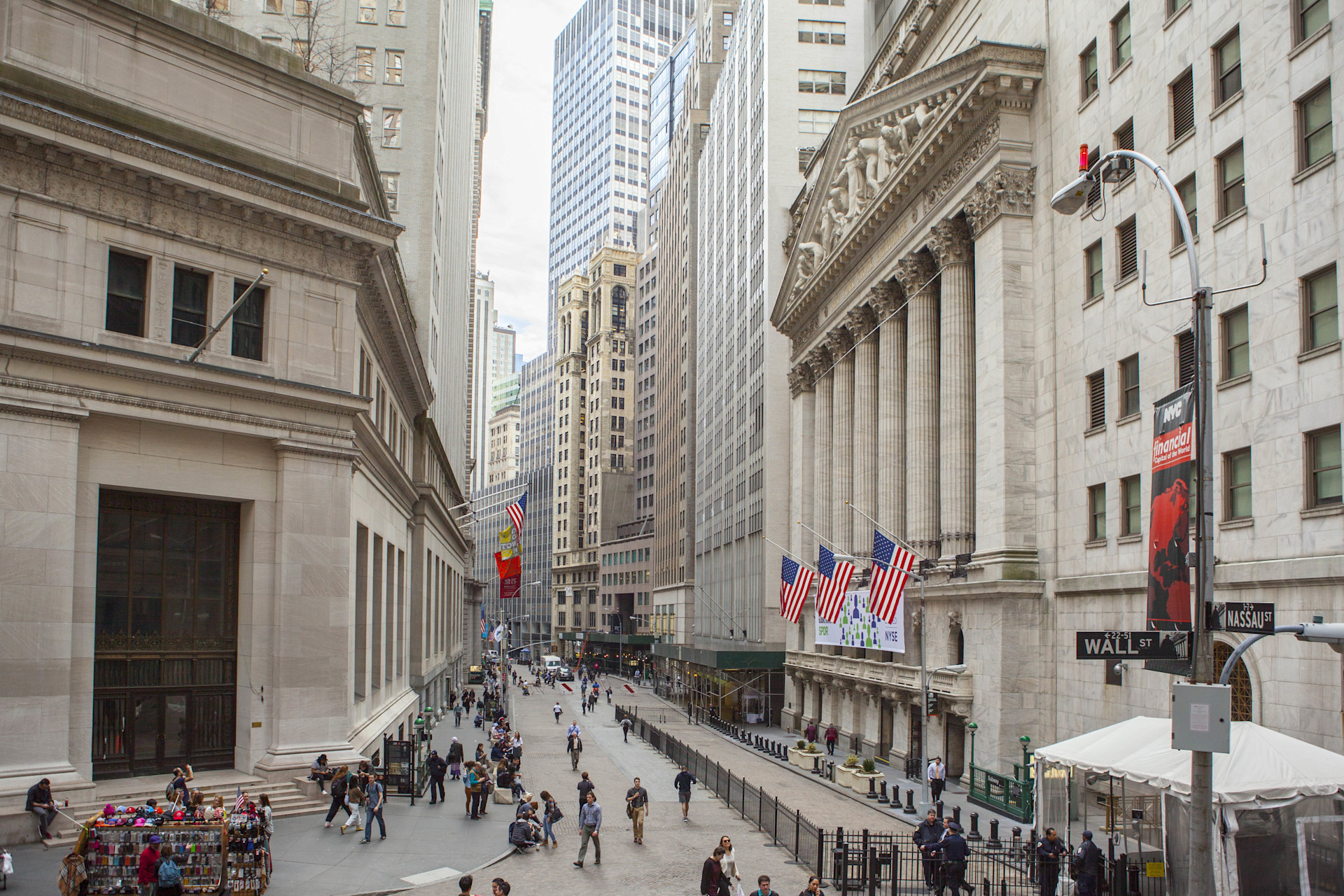
Wall Street is no longer a physical place; it is a globally distributed, high-frequency network of capital extraction and allocation. The Hollywood image of screaming traders in tailored suits waving paper tickets died two decades ago. Today, the street is ruled by quantitative algorithms, passive index funds, and alternative asset managers who control trillions of dollars with a fraction of the historical headcount.
The primary function of Wall Street is to act as the intermediary between those who have capital (investors, pension funds, sovereign wealth) and those who need capital (corporations, governments, startups). They charge a toll on every transaction, every merger, and every IPO.
In 2026, the ecosystem is highly concentrated. Following decades of consolidation (accelerated by the 2008 financial crisis and the 2023 regional banking stress), a handful of “Too Big To Fail” universal banks (like JPMorgan Chase and Goldman Sachs) and massive asset managers (like BlackRock and Vanguard) effectively dictate the flow of global liquidity.

For an operator building a holding structure, understanding Wall Street is mandatory. It is the ultimate reality filter for capital. Wall Street does not care about your narrative; it cares about your unit economics, your cost of capital, and your execution speed. If you do not understand how institutional money is priced and deployed, you will always be at the mercy of those who do.
Ecosystem Anatomy: The Financial Machinery
- What is Wall Street? The collective term for the US financial markets, comprising investment banks, commercial banks, asset managers, hedge funds, private equity firms, and stock exchanges.
- Founded: 1792 (The Buttonwood Agreement, establishing the NYSE).
- Headquarters: Lower Manhattan, New York City (Symbolic); Globally distributed (Operational).
- Apex Executives: Jamie Dimon (JPMorgan Chase), Larry Fink (BlackRock), David Solomon (Goldman Sachs), Stephen Schwarzman (Blackstone).
- Business segments: Investment Banking (M&A, Underwriting), Sales & Trading, Asset & Wealth Management, Private Equity/Alternative Investments, Retail Banking.
- Products: Equities (Stocks), Fixed Income (Bonds), Derivatives (Options/Futures), Exchange-Traded Funds (ETFs), Syndicated Loans.
- Market capitalization (Total US Equities): ~$50+ Trillion (Representing over 40% of total global equity value).
- Employees: ~350,000+ directly in NYC securities and banking; millions globally.
- Main competitors: The City of London (UK), Hong Kong, Shanghai, Tokyo, Frankfurt.
- Global presence: US capital markets are the deepest and most liquid on Earth, dictating global interest rates and corporate valuations.
- AI strategy: Quantitative Execution & Risk Assessment. AI is not replacing relationship bankers; it is replacing junior analysts and traders. Massive language models ingest global news in milliseconds to execute high-frequency trades, while generative AI drafts pitch books, analyzes credit risk, and optimizes portfolio rebalancing at near-zero marginal cost.
- Key acquisitions (Historical Consolidation): JPMorgan acquires Bear Stearns & Washington Mutual (2008), Bank of America acquires Merrill Lynch (2008), UBS acquires Credit Suisse (2023).
- Future outlook: The ongoing shift of power from heavily regulated traditional banks (who are forced to hold massive capital reserves) to unregulated “Shadow Banking” entities (Private Credit and Private Equity firms like Apollo and Blackstone) who are aggressively taking over corporate lending.
Key Takeaways
- The Rise of Passive Investing: BlackRock, Vanguard, and State Street (the “Big Three”) control over $25 trillion in combined assets. They achieved this by realizing that active stock-picking usually fails to beat the market. By offering ultra-low-fee, passive ETFs (like the S&P 500), they absorbed the retirement savings of the entire American middle class, giving them unprecedented voting power over the boards of global corporations.
- The Private Credit Boom: Since 2008, regulations have made it expensive for traditional banks to lend to risky companies. Private Equity firms stepped into the void, creating “Private Credit” funds. Today, if a mid-sized company needs $500 million, they often bypass the banks entirely and borrow directly from firms like Apollo or Ares at higher interest rates.
- High-Frequency Trading (HFT): Human reaction time is irrelevant. Over 70% of all US equity trading volume is executed by algorithms. Firms spend hundreds of millions of dollars to lay fiber-optic cables simply to gain a microsecond advantage in executing a trade before their competitors.
- The M&A Cycle: Investment banks survive on volatility and corporate restructuring. When the economy is booming, they charge massive fees to take companies public (IPOs). When the economy is contracting, they charge massive fees to help companies merge or restructure their debt. The bank always collects the toll.
Historical Timeline
| Date | Milestone | Key Details |
| May 1792 | Buttonwood Agreement | 24 stockbrokers gather under a buttonwood tree on Wall Street to establish a centralized exchange, birthing the NYSE. |
| 1933 | Glass-Steagall Act | Following the 1929 crash, Congress legally separates commercial banking (deposits) from investment banking (risk-taking). |
| 1999 | Repeal of Glass-Steagall | The Gramm-Leach-Bliley Act repeals the separation, allowing the creation of modern massive “Universal Banks” like Citigroup. |
| 2008 | The Global Financial Crisis | The collapse of Lehman Brothers triggers a global meltdown driven by toxic mortgage-backed securities. The government bails out the survivors, forcing massive consolidation. |
| 2010 | Dodd-Frank Act | Imposes brutal capital requirements and stress tests on major banks, permanently altering their risk profiles and profitability. |
| 2023 | The Regional Bank Crisis | Silicon Valley Bank and First Republic collapse due to interest rate shocks, driving even more deposits and power into the “Too Big To Fail” apex banks. |
The Core Engine: Capital Flows
To understand Wall Street, you must understand how money moves between the three primary factions: The Sell-Side, The Buy-Side, and the Shadow Banks.
1. The Sell-Side (Investment Banks)
Firms like Goldman Sachs and Morgan Stanley. They do not hold the assets; they facilitate the transaction. If your holding company wants to issue $1 billion in bonds to build a factory, you hire an investment bank. They find the buyers, structure the legal paperwork, and take a 1% to 3% cut of the total deal. They are the brokers.
2. The Buy-Side (Asset Managers & Hedge Funds)
Firms like BlackRock, Fidelity, and Citadel. They control the actual money. They take capital from pension funds and everyday investors and deploy it into the market. Asset managers generally play the long, safe game (ETFs). Hedge funds take extreme, leveraged risks to generate massive short-term returns.
3. The Shadow Banks (Private Equity & Private Credit)
Firms like Blackstone and Apollo. They operate outside the strict regulations of traditional banks. They buy entire companies, restructure them aggressively (often by firing staff and cutting costs), and sell them five years later for a massive profit.
Global Market Competition (2026 Context)
| Faction | Core Advantage | Execution Strategy | Structural Vulnerability |
| Universal Banks (JPMorgan, BofA) | Massive consumer deposit base provides cheap, stable capital. | Leverage consumer deposits to fund global investment banking and trading operations. | Immense regulatory oversight and capital requirement constraints. |
| Pure-Play Investment Banks (Goldman Sachs, Morgan Stanley) | Elite talent density; unmatched M&A advisory reputation. | High-margin advisory and wealth management. | Highly exposed to market volatility; lack the stable consumer deposit cushion. |
| Mega Asset Managers (BlackRock, Vanguard) | Absolute scale. Trillions under management allow for rock-bottom fees. | Passive indexing. Accumulate all retail capital by charging near-zero expense ratios. | Political blowback (ESG backlash) due to their massive voting power over corporate boards. |
| Alternative Managers (Blackstone, Apollo) | Capital is “locked up” for 7-10 years, preventing bank runs. | Private buyouts and aggressive direct lending (Private Credit). | Highly sensitive to sustained high interest rates, which destroy buyout math. |
Key Numbers
| Metric | The 2026 Wall Street Reality |
| JPMorgan Chase Total Assets | ~$4.0+ Trillion (The largest bank in the US) |
| BlackRock Assets Under Management (AUM) | ~$10.5+ Trillion |
| Algorithmic Trading Volume | ~70% to 80% of all daily US equity trades |
| Standard Investment Banking M&A Fee | 1% to 3% of total transaction value |
Common Misconceptions
“The stock market is the economy.”
False. The stock market is a forward-looking indicator of corporate profitability, not a reflection of current economic health. During periods of massive unemployment, the stock market can hit all-time highs if the Federal Reserve cuts interest rates and injects liquidity into the system. Wall Street runs on liquidity, not Main Street prosperity.
“Hedge funds always beat the market.”
Over a 10-year horizon, the vast majority of active hedge funds fail to outperform a simple, passive S&P 500 index fund after their exorbitant fees (traditionally 2% of assets and 20% of profits) are deducted.
Why It Matters for Businesses
The Reality Filter: The Cost of Capital
For an executive structuring a holding company (like the Lyun Group), understanding Wall Street is understanding your fuel source.
- Capital is a Commodity: Money is exactly the same whether you get it from JPMorgan, a venture capitalist, or a private credit fund. The only thing that matters is the terms (interest rate, covenants, and equity dilution). You must structure your business to access the cheapest capital available. If your data is fragmented and your operations are bloated, Wall Street will classify you as high-risk and charge you a massive premium to borrow.
- The Liquidity Event: You do not build a complex ecosystem just to run it forever. Wall Street provides the exit. Whether you intend to take a subsidiary public (IPO) or sell it to Private Equity, you must architect the company from Day 1 to pass a Wall Street due-diligence audit. Standardized SAP architecture, automated AI workflows, and ruthless operational minimalism ensure maximum valuation multiples when it is time to sell.
FAQ
What is the S&P 500?
An index tracking the stock performance of 500 of the largest companies listed on stock exchanges in the United States. It is considered the ultimate benchmark of the overall US stock market.
What is an IPO?
Initial Public Offering. The process by which a private company issues shares of stock to the public for the first time, facilitated by an investment bank, allowing the founders and early investors to cash out.
What is the Federal Reserve’s role?
The US central bank. They dictate the baseline cost of money (interest rates). When the Fed raises rates, borrowing becomes expensive, and Wall Street stocks generally fall. When the Fed lowers rates, money is cheap, and Wall Street surges. Do not fight the Fed.
What is Private Credit?
When a non-bank institution (like a private equity firm) lends money directly to a company. It is currently the fastest-growing sector on Wall Street because traditional banks are heavily restricted by government regulators from making risky loans.


