

The latest research from the Savannah College of Art and Design suggests the next competitive advantage won’t belong to those who produce the most with artificial intelligence—but to those who know how to direct it with intention, judgment, and vision.
For the better part of the last three years, the conversation around artificial intelligence has been dominated by a single question: What can AI create?
Every new model seemed to push the boundary a little further. Images became more realistic. Videos more convincing. Code more reliable. Entire marketing campaigns, software prototypes, music, and digital experiences could suddenly be generated in minutes rather than weeks. Progress became synonymous with speed, and speed became the metric by which the industry measured success.
The assumption felt almost inevitable: as machines became increasingly capable of producing creative work, the value of human creativity would gradually diminish.
The newly released SCAD AI Insights 2026 Report challenges that assumption—not by denying AI’s extraordinary capabilities, but by proposing that the industry’s biggest transformation is happening somewhere else entirely. Rather than documenting another technological breakthrough, the report argues that creative value itself is migrating. It isn’t disappearing. It isn’t becoming obsolete. It is moving toward the parts of the creative process that machines still struggle to replicate: judgment, context, interpretation, and intentional direction.
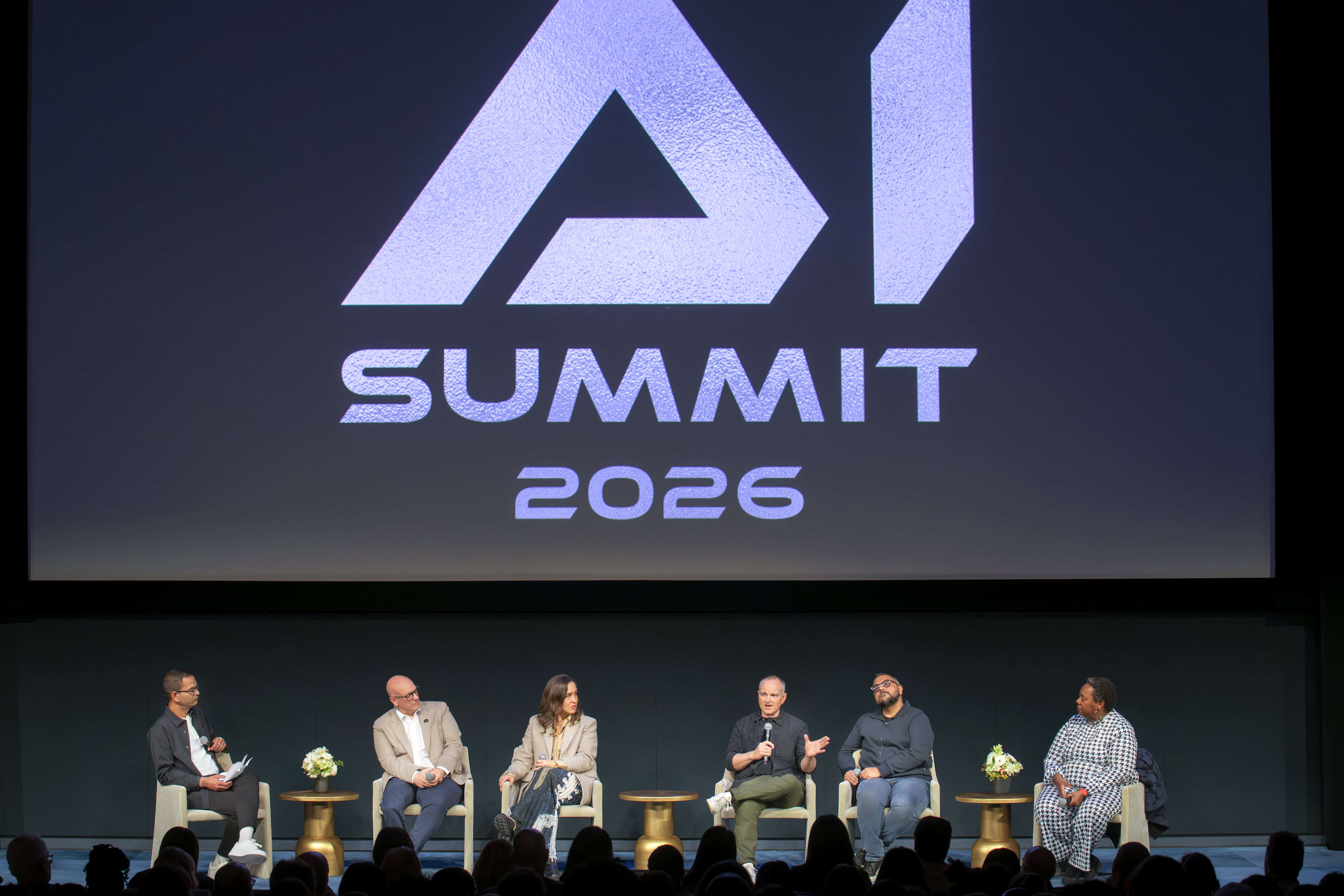
Developed by SCADask, the Savannah College of Art and Design’s applied research studio, the report combines insights from more than 100 creative leaders spanning technology, entertainment, healthcare, automotive, and enterprise. It also incorporates perspectives shared during the SCAD AI Summit by professionals from organizations including NVIDIA, Google, Adobe, Amazon, Netflix, Canva, Deloitte Digital, and The Coca-Cola Company. Together, those conversations paint a remarkably consistent picture of where creative work is heading.

The numbers tell only part of the story.
According to the research, artificial intelligence is already delivering its greatest efficiency gains in the earliest phases of creative work. Research and insight synthesis lead every measured category, followed by content creation and concept development. These findings suggest that AI is becoming exceptionally effective at accelerating discovery, exploration, and production—the foundation upon which creative projects begin.
Yet the same research uncovers an equally important contradiction.
Nearly two-thirds of respondents still define AI success primarily through time saved, while measures such as output quality, customer outcomes, and revenue growth account for only a small fraction of how organizations evaluate results. In other words, businesses are becoming increasingly efficient, but many may still be measuring efficiency rather than creative value.
That distinction sits at the heart of the report.
The conversation, SCAD argues, is no longer about whether artificial intelligence can generate content. That debate is rapidly becoming irrelevant. The more consequential question is what happens after generation becomes abundant. When everyone can produce faster, the competitive advantage inevitably shifts elsewhere.
The report describes this transition as the emergence of a new “direction layer.” It represents the uniquely human ability to define objectives, recognize quality, interpret context, challenge assumptions, and understand why an idea deserves to move forward—or why it should not. In a world where production becomes increasingly automated, direction becomes the scarce resource.
This is not presented as a rejection of AI. On the contrary, the report argues that artificial intelligence amplifies the importance of human expertise by removing friction from execution while increasing the value of discernment. As production accelerates, creative leadership becomes less about making every asset by hand and more about deciding what should exist, what aligns with a broader vision, and how technology should be orchestrated to serve that vision.
That philosophy extends beyond theory.
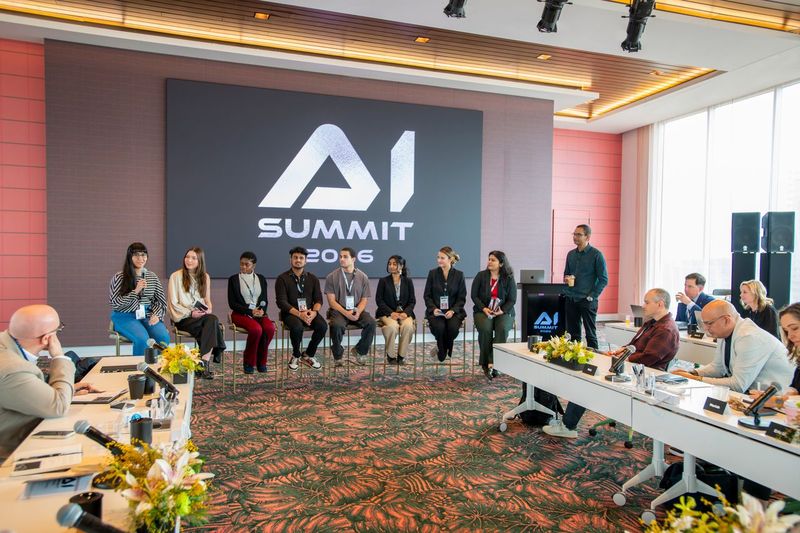
During this year’s SCAD AI Summit, the university launched its first AI Summit Jam, a 48-hour innovation challenge powered by NVIDIA technologies. More than 70 students from multiple disciplines worked in interdisciplinary teams to build solutions using OpenUSD, NVIDIA Omniverse, digital twins, and AI-assisted workflows. Their projects ranged from immersive environments and hospital digital twins to coral reef simulations and memory-preservation systems, demonstrating that the next generation of creators is already learning to coordinate complex AI ecosystems rather than simply operate individual tools.
Perhaps the most striking takeaway from the report is that it reframes artificial intelligence as something far more nuanced than an automation story. It suggests the industry is entering a period where technological progress will no longer be measured by how much content machines can generate, but by how effectively humans can provide purpose, editorial judgment, ethical reasoning, and strategic direction.
If that assessment proves correct, the future of creative work may belong neither to the fastest creators nor to the most sophisticated algorithms.
It may belong to those capable of asking better questions before the first prompt is ever written.
Next in this series
If creative value is moving away from production, where is it going?
In the next chapter of our coverage, we’ll explore why the greatest productivity gains from AI are happening before the creative process truly begins—and why that changes how companies, universities and designers should think about the future of work.



Deixe uma resposta